ASKING FOR A FRIEND
Can you give your honest take on what you think a designer role will look like in the future?
ASKING FOR A FRIEND - QUESTION
Ever wondered what a designer's role will actually look like in a few years time? In this "Asking For A Friend" piece, Tarra van Amerongen, Head of Design at Atlassian's Jira Platform and design educator at UTS, and Ash King, psychologist and cyberpsychology researcher at the University of Sydney, give their honest take. From tool-agnostic thinking and collaborative leadership to building resilience in the face of uncertainty, this article covers what it really means to future-proof a design career. Whether you are a seasoned creative or just starting out, this one is worth a read.
Designing the Unknown: What the Future Holds for Designers
The future of design is one of the most talked-about topics in creative industries right now, and for good reason. With AI reshaping workflows, tools evolving faster than ever, and the boundaries between disciplines blurring, it is natural to wonder: what will a designer actually do in a few years time?
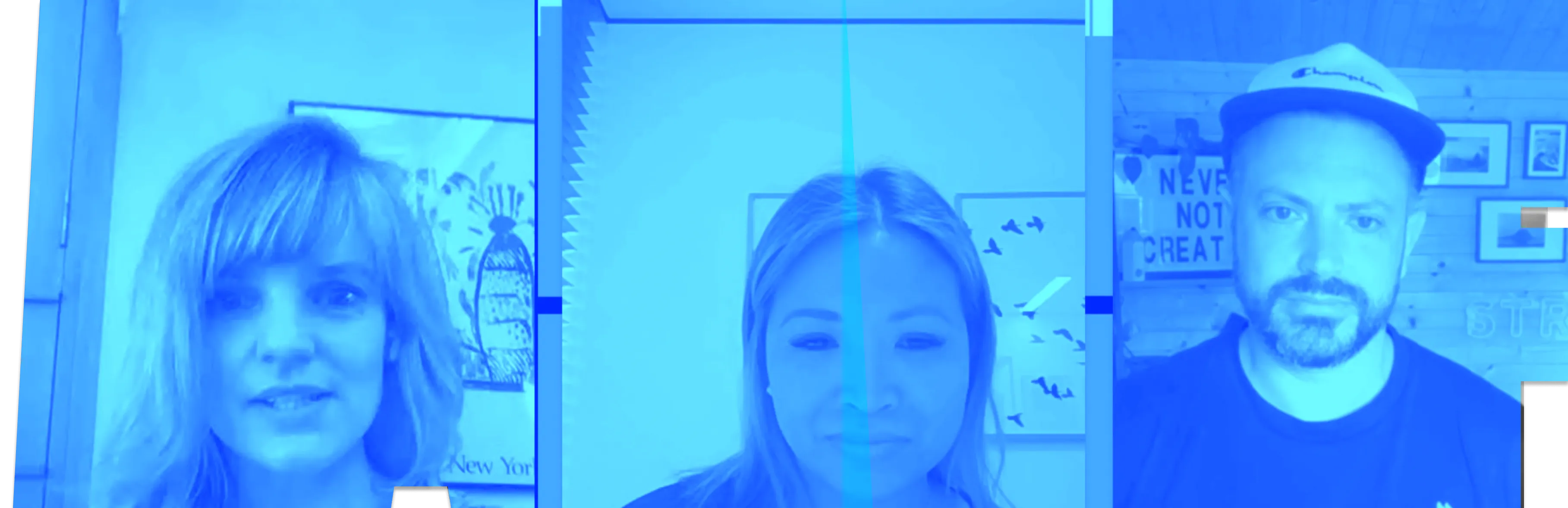
This question was answered by Tarra van Amerongen, Head of Design at Jira Platform, Atlassian, and design educator at UTS, alongside psychologist and cyberpsychology researcher Ash King from the University of Sydney. The conversation was hosted as part of Never Not Creative's "Asking For A Friend" series.
Think of Yourself as an Inflection Point
Tarra opens with a reframe that is worth sitting with: rather than panicking about the future, think of yourself as an inflection point. Look back to look forward. A designer 100 years ago was crafting typefaces for the Gutenberg printing press. The tools have always changed. What has not changed is the underlying craft.
As Tarra puts it, the core skills of "sense making, taking empathy, drawing insights" remain constant. The medium shifts. The mindset endures.
Design is Getting Broader and More Collaborative
One of the clearest shifts Tarra identifies is that design is expanding, not shrinking. As more people gain access to design tools, the response should not be protectiveness, but inclusion. Designers will increasingly work alongside product managers and engineers, compressing skill sets and leading non-designers through the design process.
"You're designing together," Tarra explains, "and maybe you're leading the way, but you're leading non-designers with you."
This is not a threat to the designer's role. It is an evolution of it.
Tool Agnostic is the New Competitive Advantage
Sketch. InVision. Figma. The tools keep changing, and Tarra is clear: fluency in any one tool is no longer the point. What matters is understanding the materiality of what you are designing, the end-to-end experience, the pain points, the moments of delight.
"Get to know what those new foundations are so you can be tool agnostic," she says. In a landscape where tools shift constantly, adaptability is the real skill.
Design Leadership is More Important Than Ever
Tarra recounts a conversation with an AI-first design leader at Microsoft who asked: "Will I even be needed as a design manager in the future?" Tarra's answer is a resounding yes, and for a compelling reason.
When everyone can build quickly and go in any direction, someone still needs to set the vision. Someone needs to coordinate, excite, and align. "Your role, in my view, is even more important," Tarra says, "because you need to set out what the future is so that everyone has somewhere to go."
Vision-setting, people-gathering, excitement-building: these are evergreen skills that no tool can replace.
Staying Informed Without Burning Out
When asked how she keeps up with what is coming next, Tarra offers a refreshingly grounded approach: follow the money, not the noise. Rather than trying to absorb every new development, she watches for first movers and adopts "just in time learning," only diving deep when a decision actually needs to be made.
"I'm trying to look at just what that next little hill is," she says. "I still have to do my job today and tomorrow."
The host also recommended analyst Ben Benedict Evans, who frames technological change across a hundred-year arc, helping distinguish genuine trends from passing fads.
Building Resilience for an Uncertain Future
Ash brings a psychological lens to the conversation, zooming out to acknowledge something important: none of us can predict the future with any solid degree of certainty. And that is okay.
Drawing on her own experience of unexpected life change, including a vocal injury that ended her music career and redirected her path entirely, Ash speaks to the power of building strong character over chasing certainty.
"What we really need to build is an awareness and understanding of strong character and the types of resilience and grit that allows us to keep showing up," she says.
She points to curiosity and compassion as two qualities worth cultivating: curiosity to keep exploring, and compassion, for others and for yourself, when things get hard. These are not soft extras. In an uncertain future, they are foundations.
You Are Still in Control
The conversation closes with a grounding reminder from the host: AI is a tool. Like every tool before it, it is still you who is in control. The designers who thrive will be those who stay curious, stay adaptable, and resist the urge to hand over their agency.
The future of design is not something happening to you. It is something you are actively shaping, one decision, one collaboration, one considered choice at a time.
our guests
Industry Leader

Tarra van Amerongen
Mental Health Expert

Ash King
ashking.com
Host